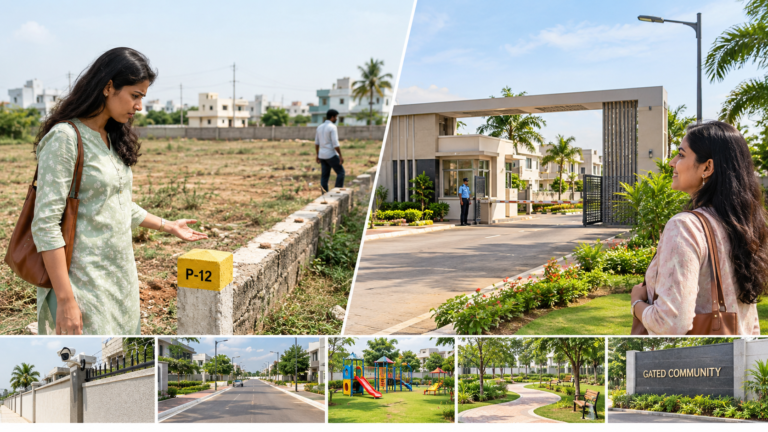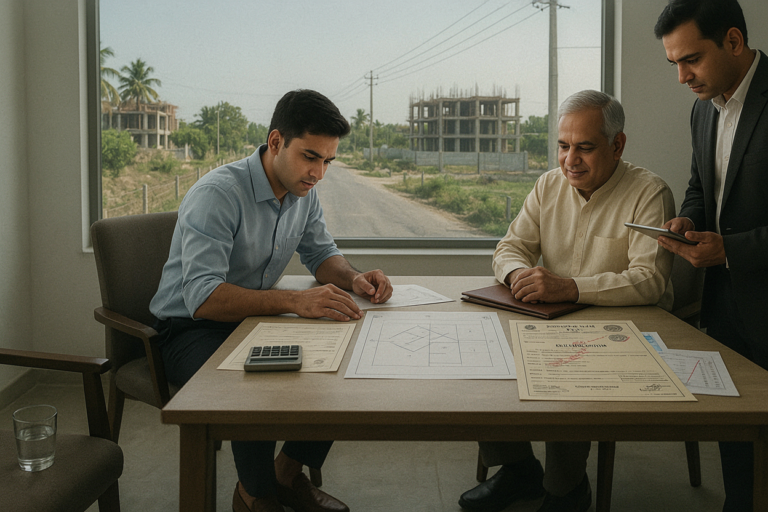
One of the most practical questions a first-time plot buyer asks and rarely gets a complete answer to is how much land is actually required to build the house they have in mind. The answer is not a single number. It is a combination of regulatory requirements, construction goals, and long-term lifestyle considerations that vary significantly depending on location, local authority jurisdiction, and the type of home being planned.
Understanding these dimensions before purchasing a plot prevents one of the most common and costly mistakes in residential real estate buying land that cannot accommodate the intended structure.
What Regulations Actually Determine on Your Plot
Minimum Plot Size Requirements in Tamil Nadu
Tamil Nadu’s planning regulations governed by DTCP and CMDA guidelines depending on the zone establish minimum plot sizes for residential construction. Within the Chennai Metropolitan Area under CMDA jurisdiction, the minimum plot size for a residential house is generally 60 square metres, which translates to approximately 645 square feet.
Outside the CMA, under DTCP jurisdiction, the minimum plot size requirements vary by local planning authority but typically start around 45 to 60 square metres for residential use. Plots below these thresholds cannot receive building plan approval regardless of what a buyer intends to construct on them.
Setback Rules Reduce Your Actual Buildable Area
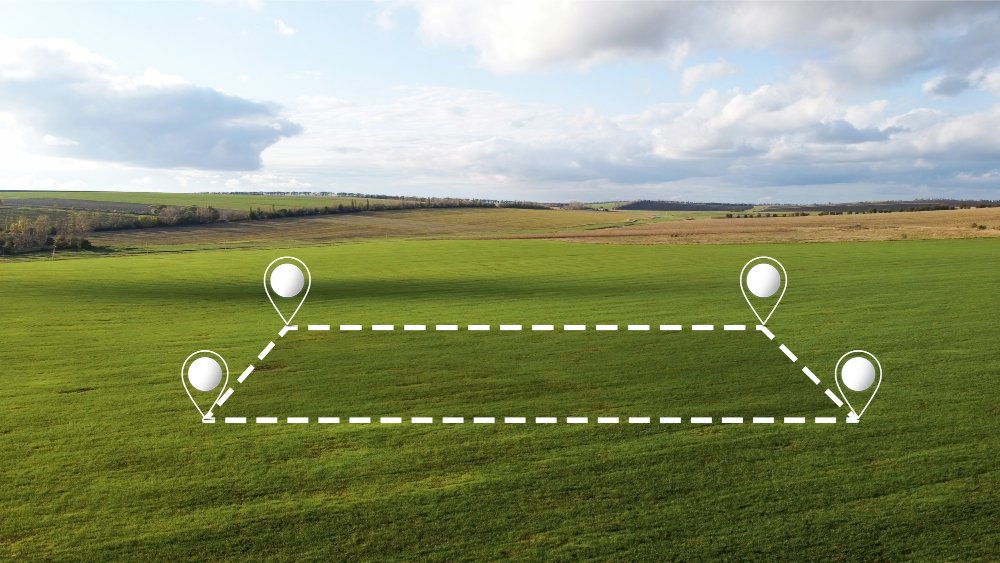
Purchasing a plot of a certain size does not mean the entire area is available for construction. Every local planning authority mandates setbacks minimum distances that must be maintained between the building and each boundary of the plot.
Under standard CMDA norms, a residential plot typically requires a front setback of 3 metres, rear setback of 1.5 to 2 metres, and side setbacks of 1 to 1.5 metres on each side. These setbacks consume a meaningful portion of the total plot area particularly on smaller plots and directly reduce the footprint available for the actual structure.
On a 600 square foot plot, mandatory setbacks can consume close to 30 to 35 percent of the total area, leaving significantly less than expected for the built structure.
Matching Plot Size to Construction Goals
What Different Plot Sizes Realistically Accommodate
A plot in the range of 600 to 800 square feet commonly designated as 1.5 to 2 grounds in Tamil Nadu’s local measurement convention can typically accommodate a compact two-bedroom house across one or two floors, subject to FSI limits applicable in that zone.
FSI, or Floor Space Index, governs the total built-up area permitted relative to the plot size. An FSI of 1.5 on an 800 square foot plot permits a maximum built-up area of 1,200 square feet across all floors combined. This is a workable configuration for a three-bedroom home spread across two levels but it leaves minimal margin for a garage, garden, or future expansion.
Plots in the 1,000 to 1,500 square foot range offer meaningfully more flexibility accommodating larger single-floor layouts or spacious two-floor configurations while still maintaining comfortable setbacks and some outdoor space.
The Future Expansion Consideration
A plot that exactly meets current requirements without any surplus area creates a rigid construction environment. Families whose space needs grow over time additional bedrooms, a home office, extended family accommodation find themselves constrained on minimum-sized plots in ways that a modestly larger purchase at the outset would have entirely avoided.
Evaluating plot size against not just current family composition but realistic five to ten year household needs produces more durable purchasing decisions than optimising purely for today’s budget.
The Practical Framework for Decision Making
The minimum regulatory threshold answers what is legally permissible. The FSI calculation answers what can be built. The setback analysis answers what footprint is actually available. And the future needs assessment answers what will remain adequate over the intended ownership horizon.
Buyers who work through all four of these dimensions ideally with both an architect and a property lawyer reviewing the specific plot and local regulations arrive at a plot size decision grounded in construction reality rather than assumptions that the registration day rarely validates.