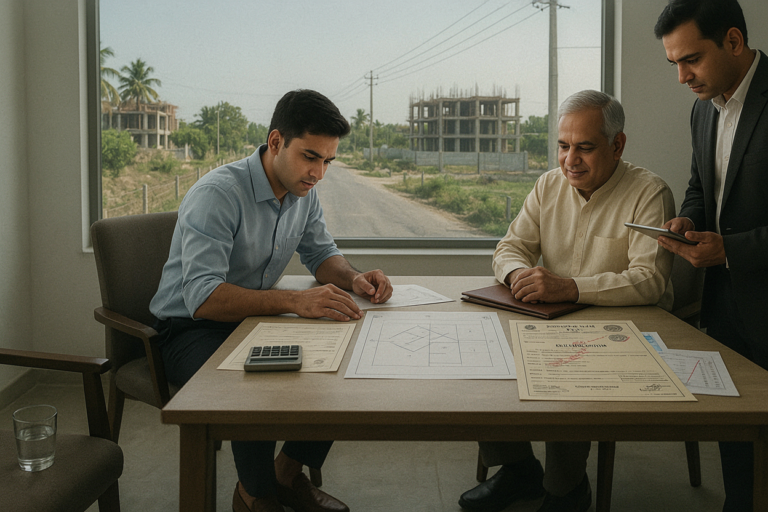

Harish was handed a sale deed by the seller’s agent a thick bundle of pages with official-looking stamps and signatures. It looked legitimate. It felt legitimate. He almost signed his own purchase agreement based on that impression alone.
His uncle, who had once been burned by a property dispute decades earlier, took one look and asked a single question. “Have you traced this deed back at least thirty years?”
Harish had not. He did not even know that was a standard practice. What followed was a week of verification that ultimately confirmed the deed was genuine but the process taught him exactly what “verifying a sale deed” actually means.
Why Looking at a Sale Deed Is Not the Same as Verifying It
A Document Can Look Official and Still Be Incomplete
A sale deed carries stamps, signatures, and registration numbers all of which can appear entirely authentic while still concealing gaps in the ownership chain. The deed in front of a buyer is usually only the most recent transfer. It does not, by itself, prove that every transfer before it was equally clean.
This is why property lawyers insist on tracing ownership back through a chain of title typically a minimum of thirty years in most Indian states. Each link in that chain every sale, every inheritance, every gift deed needs to connect logically to the next, with no unexplained gaps or disputed transfers along the way.
What “Tracing the Chain” Actually Involves
Tracing the chain means requesting copies of every prior sale deed connected to the property, not just the most recent one. A property lawyer examines whether each transfer was properly registered, whether the parties involved had the legal authority to sell at that time, and whether any transfer in the sequence shows signs of dispute, fraud, or incomplete documentation.
For Harish’s property, that meant pulling deed copies going back to 1991 four owners before the current seller and confirming each transition was clean.
The Practical Checks Every Buyer Must Complete
Matching the Deed to Government Records
The survey number, boundaries, and extent mentioned in the sale deed must match exactly what is recorded in the government’s patta and chitta records. Any mismatch even a small discrepancy in extent needs to be resolved and explained before proceeding.
Confirming the Seller’s Authority to Sell
If the property is inherited, jointly owned, or held by a company, the buyer must confirm that the person signing the sale deed actually has the legal authority to transfer the entire property. Missing signatures from co-owners or incomplete succession documentation are common sources of disputes that surface years after a sale.
Checking for Registration Authenticity
Every genuine sale deed carries a registration number that can be independently verified at the Sub-Registrar’s office where it was originally registered. This confirms the document was actually registered through proper channels rather than fabricated to look official.
What Harish Learned From the Week He Spent Verifying
The deed turned out to be genuine. The chain of title was clean all the way back. But Harish’s confidence in that outcome came entirely from the verification process not from how the document looked when it was first handed to him.
His advice to anyone buying property today is simple. A sale deed that looks official tells you nothing on its own. It is the chain behind it, the records it matches against, and the authority of the person signing it that actually determines whether a property purchase is safe.