

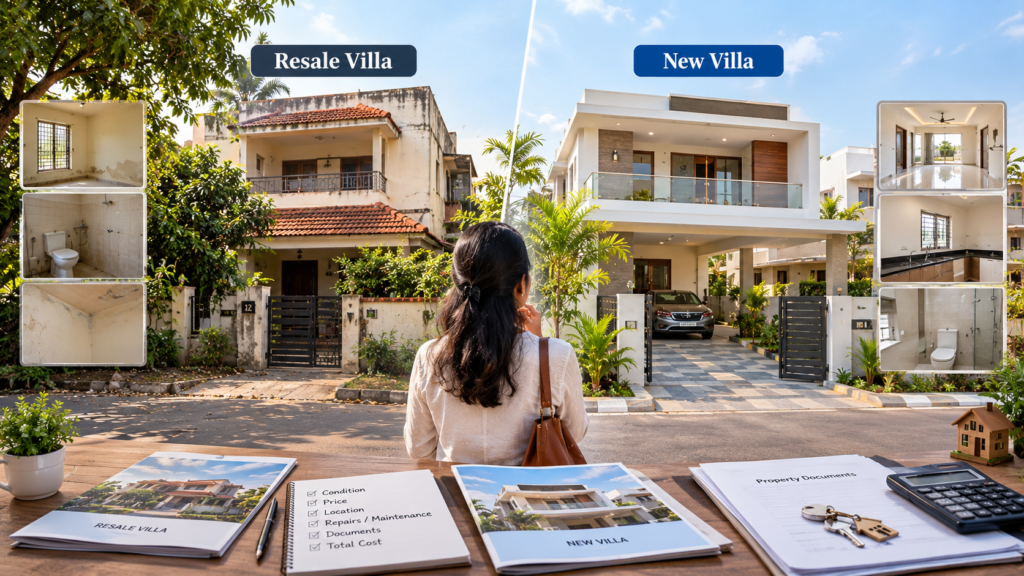
Buying a villa does not always mean purchasing a brand-new property. Sometimes, a house that has already had an owner can offer something a new project cannot: a property you can inspect exactly as it stands today. You can see the rooms, check the fittings, observe the neighbourhood, and understand how the property has aged. This is one of the main reasons buyers consider a resale villa. A new villa offers a different experience. You become the first owner and usually get newer construction, fittings, and finishes. So, how do these two stack up?
What Is a Resale Villa?
A resale villa is an existing villa that its current owner wants to sell. It could be a relatively recent property or a house that has been occupied for many years. Its condition depends on factors such as construction quality, maintenance, usage, and age.
You Can Inspect the Property First
This is a practical advantage. Instead of judging the home only from a plan or brochure, you can walk through the actual building. Check the walls, doors, flooring, bathrooms, electrical points, ventilation, parking area, and outdoor space. You can also ask about previous repairs and maintenance.
What Makes a New Villa Different?
A new villa is being sold to its first owner. It may already be complete, or it might still be a construction site. The property will generally have new fittings and finishes, and there may be fewer immediate repair concerns.
But New Does Not Always Mean Perfect
Just because it’s new doesn’t mean it doesn’t need a proper look-over. Check the construction quality, water supply, drainage, electrical work, finishing, promised specifications, and handover details before accepting the property. If the villa is under construction, understand exactly what is included in the agreement.
Which One Can Cost Less?
There is no fixed rule. A resale villa may have a lower asking price than a similar new property, but the buyer might need to spend additional money on painting, repairs, renovation, or upgrades. A new villa may have a higher purchase price while requiring less immediate maintenance.
Compare the Complete Expense
Don’t compare only the advertised sale prices. Add registration expenses, loan-related costs, maintenance charges, renovation requirements, and other applicable expenses. Then compare the total amount you are likely to spend on each option.
Location Can Be a Major Difference
A resale villa may already be located in an established neighbourhood. You may find functioning roads, nearby shops, schools, transport facilities, and occupied homes around it. A new villa project could be in an area that is still developing. That may offer future potential, but some planned facilities may take time to arrive.
Documents Need Careful Checking
This part should never be skipped. For a resale villa, verify the seller’s ownership, previous sale documents, property tax records, approvals, encumbrance details, and other relevant paperwork. For a new villa, examine the developer’s title and approval documents, agreement terms, specifications, and project-related records.
Which Villa Should You Buy?
A resale villa may suit you if you want to inspect an existing home, understand the neighbourhood immediately, and possibly negotiate directly with the owner. A new villa may appeal more if you prefer fresh construction, modern fittings, and being the property’s first owner. There is no universal winner.
The smarter choice depends on your budget, preferred location, property condition, maintenance expectations, and long-term plans. Compare the actual properties carefully rather than choosing simply because one is new or the other is cheaper.




wish you best and best