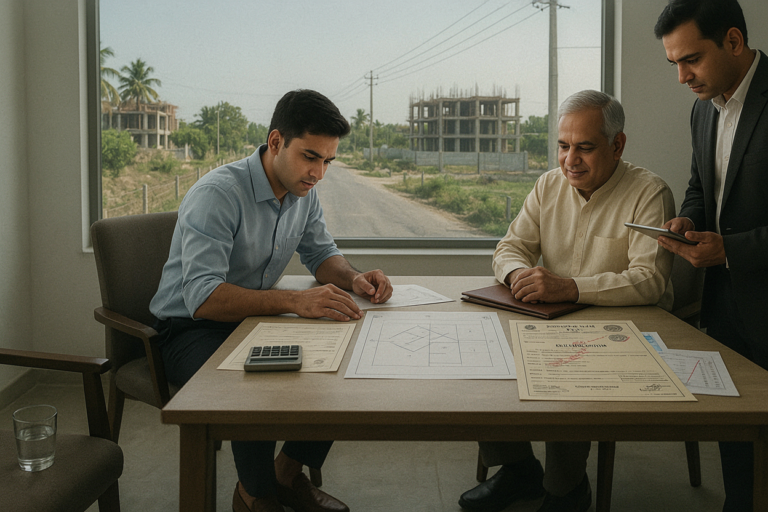

Meena found a flat she loved. The seller wanted to close fast. He suggested skipping the sale agreement and going straight to registration. It would save time, he said. The price was agreed. Why add another step? Meena almost agreed. Her cousin called that evening and asked one question that changed her mind.
What happens to your advance if the seller changes his mind tomorrow and there is nothing in writing?
Meena had no answer. She called her lawyer the next morning. A sale agreement was drafted that week. Two weeks later at the registration appointment, the seller arrived with a demand for an additional ₹1.5 lakhs above the agreed price, claiming market values had moved.
Meena showed him the signed sale agreement. He registered at the original price. Without that document, she would have had no legal ground to stand on.
What a Sales Agreement Actually Does
It Creates Legal Commitment Before Money Changes Fully
A sales agreement is a contract signed between buyer and seller before the final registration happens. It records the agreed sale price, the advance amount paid, the timeline for completing the transaction, and the conditions both parties have accepted.
Once signed, neither party can simply walk away without legal consequence. A seller who backs out after signing a sale agreement can be sued for specific performance. A buyer who withdraws without valid reason forfeits the advance paid. The agreement creates accountability in both directions during the period between commitment and registration.
This accountability period matters enormously. Property transactions rarely move from agreement to registration in a single day. Bank loans need processing. Document verification takes time. Stamp duty needs to be arranged. A sale agreement holds the transaction in place during all of that.
What It Protects Against That Verbal Agreements Cannot
A verbal agreement between buyer and seller has no legal standing in a property dispute. What was said, what was promised, and what was understood on each side cannot be proved in court without a written record.
A signed sale agreement removes that ambiguity entirely. The price is written. The timeline is written. The conditions are written. If anything goes wrong during the gap between signing and registration, the agreement is the document both sides and any court will refer to.
Is a Sales Agreement Legally Mandatory
Technically, a buyer and seller can proceed directly to sale deed registration without a prior sale agreement. Nothing in Indian property law makes the agreement a mandatory prerequisite for registration.
But practically, skipping it exposes the buyer to risks that the agreement exists precisely to eliminate. Price changes. Seller withdrawal. Competing buyers being introduced after your advance is paid. Title complications discovered mid-process. Every one of these scenarios plays out differently when a binding written agreement exists compared to when it does not.
Experienced property lawyers consistently advise completing a sale agreement before any significant advance is paid. The document costs relatively little to draft. The protection it provides against the most common transaction failures is disproportionately large.
What Meena Took Away From Her Experience
The seller backed down the moment she produced the agreement. He registered at the original price. She completed the transaction without losing money or time.
The extra step her seller had suggested skipping turned out to be the only step that protected everything else.