
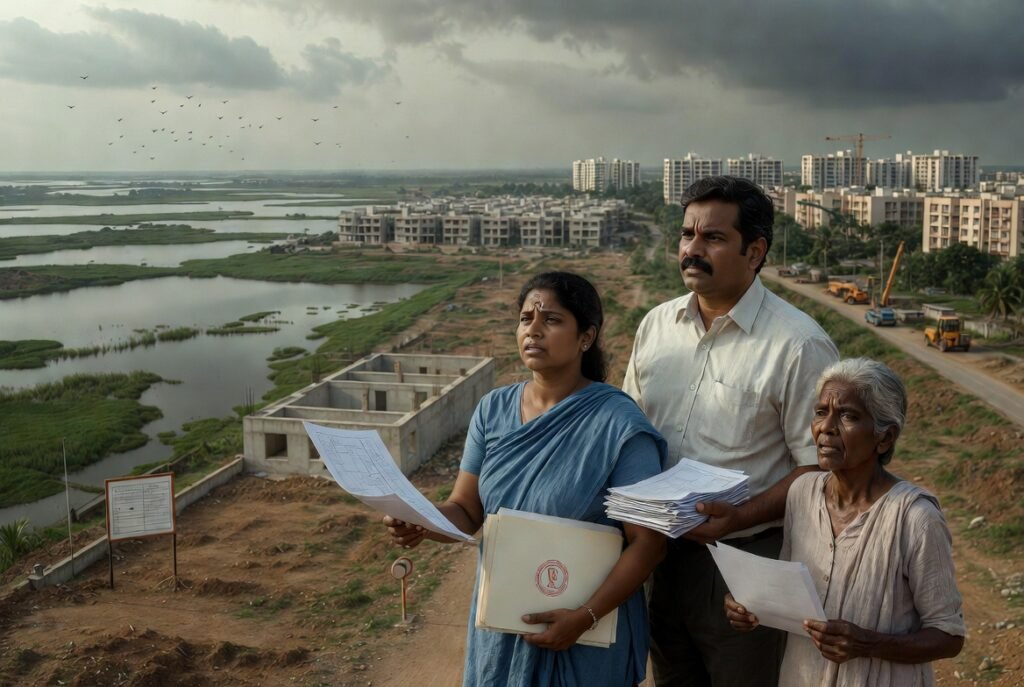
Urban development and environmental protection often move in opposite directions. The recent protest by residents of Thoraipakkam, Chennai, highlights how this conflict can directly affect thousands of families. The Chennai Metropolitan Development Authority (CMDA) has imposed a restriction on granting building permits within one kilometre of the ecologically sensitive Pallikaranai marshland. While the move aims to protect a vital wetland ecosystem, many homeowners and plot buyers say the decision has placed their financial and housing security at risk.
Why Residents Are Protesting
The restriction is not affecting just a small group. Residents claim that more than one lakh houses and property owners in areas along the fast-growing OMR IT corridor could face serious consequences. Many of these properties are located in approved residential layouts with valid patta and registration documents.
The biggest concern raised by homeowners is financial stress. Several residents say banks have started rejecting housing loan applications due to the CMDA restriction. For families who already invested life savings into buying plots, the inability to secure construction loans has created uncertainty. Some fear that even repairing or rebuilding homes in the future may become difficult if the restriction continues.
Residents Question the Policy Approach
Many protestors believe the rule is unfair because it affects legally approved residential zones instead of focusing on removing illegal encroachments inside the marshland itself. Residents argue that they purchased plots in government-approved layouts and followed all legal procedures. They feel that sudden policy changes are punishing law-abiding buyers rather than addressing the root environmental concerns.
Another major concern is policy inconsistency. Thoraipakkam and nearby regions were merged with Chennai Corporation limits in 2011. Despite this inclusion, residents say basic civic amenities such as proper drainage, road infrastructure, and flood control systems are still lacking. Now, the new construction restriction has added to their uncertainty about long-term development prospects.
Residents’ Key Demands
Protesting homeowners are asking authorities to review the circular and provide relief for people who purchased legally approved plots. They are also requesting stricter action against illegal encroachments within the Pallikaranai marshland. Residents believe that removing environmental violations directly inside the wetland would provide stronger ecological protection without affecting legitimate property owners.
They also want clarity on how the rule will impact future building permissions, reconstruction, and property resale. Clear communication from authorities could reduce panic among homeowners and investors.
Broader Impact on Chennai’s Growth
The restriction may also influence ongoing and future real estate development along Sholinganallur and the larger OMR IT corridor. These areas play a major role in Chennai’s technology and employment growth. Sudden development freezes can impact infrastructure expansion, housing availability, and investor confidence.
At the same time, environmental experts highlight the importance of preserving Pallikaranai marshland. The wetland plays a critical role in flood control, groundwater recharge, and biodiversity protection. Chennai’s past flooding events have shown the consequences of losing natural drainage ecosystems.
Finding a Balanced Solution
The current situation highlights the need for balanced urban planning. Environmental protection is essential, but policies must also consider the rights of homeowners who invested in approved developments. Transparent zoning rules, phased regulations, and clear rehabilitation plans could help reduce conflict between development and conservation goals.
Local political representatives have already promised to raise the issue with the government. The final outcome may shape how Chennai balances ecological preservation with housing and infrastructure expansion in the coming years.