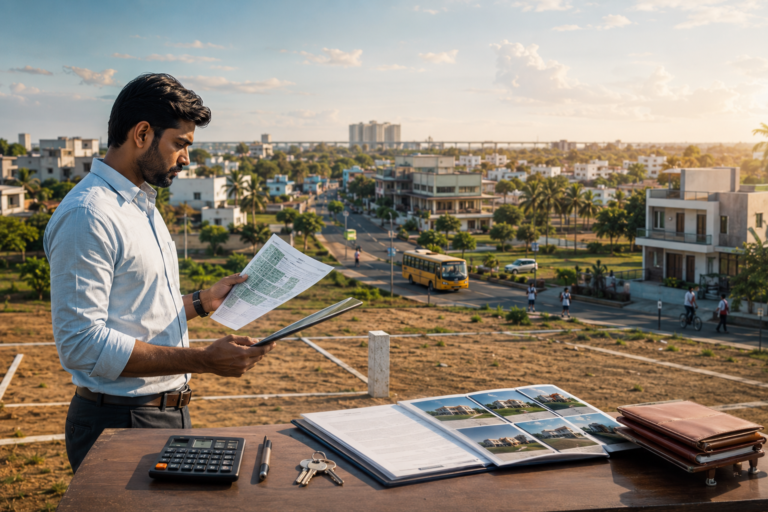
Selva used to drive past an empty stretch near Vandalur every week without giving it a second thought. Then one day he noticed buses hundreds of them parked in neat rows where there used to be open land. He pulled over, asked someone what was happening, and learned this was Kilambakkam bus stand, Asia’s largest bus terminus, finally operational after years of construction.
Six months later, a plot he had casually inquired about near the same stretch had gone up by nearly 18 percent.
That is when Selva started paying attention.
What Actually Opened at Kilambakkam
A Terminus Built on a Genuinely Massive Scale
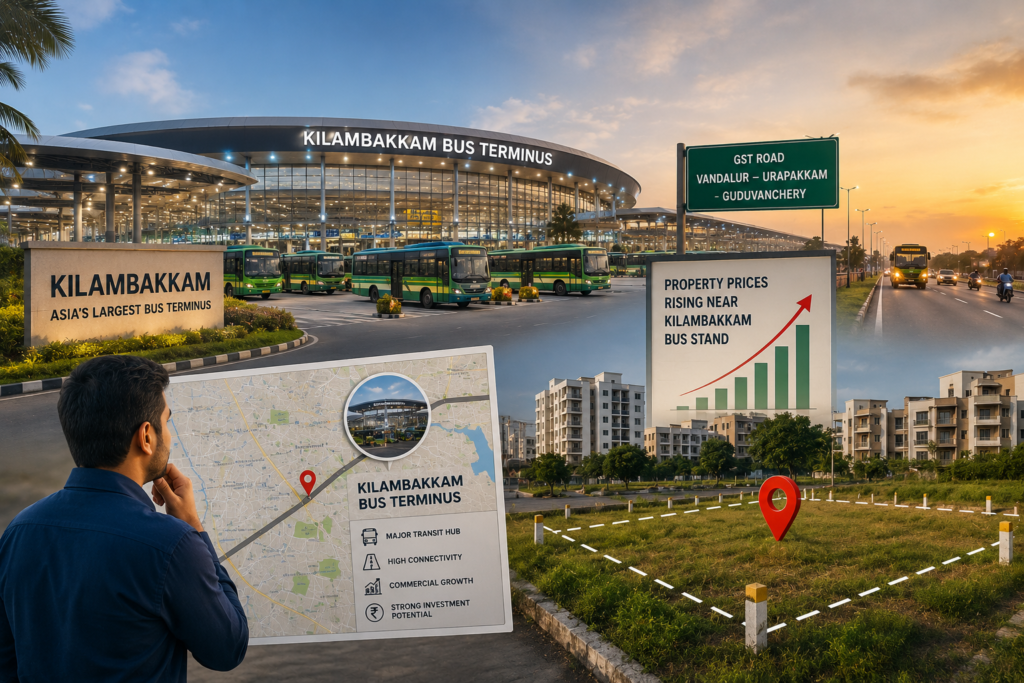
The Kalaignar Centenary Bus Terminus at Kilambakkam is not a modest upgrade to an existing facility. Spanning close to 89 acres more than double the size of the old Koyambedu terminus it replaced the project cost approximately ₹394 crore and was inaugurated to handle an enormous daily passenger load, with capacity for over 2,300 buses operating through the facility each day.
Positioned along GST Road between Vandalur and Urapakkam, the terminus consolidates all south-bound bus traffic that previously operated from Koyambedu instantly making this stretch one of the most connected transit points in South Chennai.
Why a Bus Terminus Moves Property Prices at All
A facility of this scale does not just move buses. It moves people, commercial activity, and daily footfall into a corridor that previously saw a fraction of that traffic. Restaurants, shops, transport services, and supporting businesses follow large transit hubs predictably and residential demand follows the commercial activity that builds around them.
This pattern has played out around major transit infrastructure across Indian cities for decades. Kilambakkam is simply Chennai’s most recent and most dramatic example of it.
What Is Actually Happening to Prices in the Surrounding Belt
The Localities Feeling the Impact First
Areas immediately surrounding the terminus stretches of Vandalur, Urapakkam, and the broader GST Road corridor extending toward Guduvanchery and Singaperumal Koil are seeing increased buyer interest directly tied to the terminus opening. Property listings in these zones increasingly reference proximity to Kilambakkam as a primary selling point, which itself signals how seriously the market is pricing in the connectivity advantage.
Compared to Chennai’s established inner corridors, this belt still carries meaningfully lower entry prices which is exactly why developers and individual buyers alike are positioning early rather than waiting.
Why This Phase Matters More Than Later Ones
The most significant price movements around major infrastructure typically happen in two waves once when the project is announced and land speculation begins, and again once the facility actually opens and the promised footfall becomes a daily reality rather than a future expectation.
Kilambakkam has now passed both triggers. The terminus is operational. Daily passenger movement is already substantial. Buyers entering now are no longer betting on a promise they are responding to infrastructure that is already functioning at scale.
What Selva Did With What He Learned
He went back to that plot he had casually inquired about. The price had moved, but the location fundamentals connectivity, emerging commercial activity, proximity to a transit hub handling lakhs of passengers had only strengthened since his first visit.
He is currently in discussions to buy. Not because someone told him prices were rising. Because he watched the terminus go from empty land to fully operational with his own eyes and understood exactly what that meant for everything built around it.
Property prices near Kilambakkam Bus Stand are rising because the infrastructure driving that rise is no longer a plan on paper. It is buses, passengers, and daily activity all already there.