Kavitha spent four weekends visiting apartment projects near Sholinganallur before she found one she genuinely loved. Third floor. Good ventilation. Reasonable maintenance charges. She signed the booking form the same evening.
Three years later, her building’s residents’ association started discussions about redevelopment. An older structure nearby was being rebuilt and the developer was offering compensation based on each owner’s land share. Kavitha attended the meeting assuming she would get a proportional share like everyone else.
She was right but she had no idea what her share actually was. And the number, when she finally found it buried in her sale agreement, was considerably smaller than she had assumed. That moment taught her something nobody had explained when she was busy admiring the ventilation and the floor tiles.
The Concept That Changes How You See Apartment Ownership
What You Actually Own When You Buy a Flat
Most apartment buyers think of their purchase in terms of the physical space the rooms, the walls, the fittings. What they rarely think about is the ground the building stands on. That ground does not disappear from the ownership picture once a builder constructs a multi-storey structure on it. It gets distributed as a legal entitlement among every flat owner in that building, weighted according to each flat’s size relative to the total built-up area.
This distributed entitlement is what the property world calls the Undivided Share of Land UDS. It is undivided because the land itself cannot be split and handed to individual owners in separate pieces. It is a share because each owner holds a proportional claim to the whole.
The flat on the third floor that Kavitha loved is a depreciating structure. The land beneath the building it sits on is the asset that appreciates. UDS is the mechanism through which she has any claim to that appreciating asset at all.
Why a Smaller UDS Is a Silent Weakness
Builders determine UDS allocation. In most legitimate projects, each flat gets a UDS proportional to its size relative to the total saleable area in the building. A larger flat in a building with fewer units on more land carries a stronger UDS than a smaller flat crammed into a high-density tower on a narrow plot.
Some builders, particularly in high-density developments, keep UDS allocations low sometimes deliberately, sometimes as a result of maximising the number of units on a small land parcel. The flat may look identical to one in a project with healthier UDS. The price may be similar. But the long-term asset value is not.
This gap invisible on a site visit and easy to miss in a thick sale agreement is where many apartment buyers quietly lose ground on their investment without realising it for years.
How to Protect Yourself Before Signing Anything
The Question to Ask Before the Site Visit Ends
Most buyers save their legal questions for after they have emotionally committed to a flat. By that point, raising concerns feels awkward and inconvenient. The better sequence is the opposite ask about UDS before you fall in love with the layout.
A builder or sales representative at a legitimate project will either know the UDS allocation immediately or be able to provide it within a day. If the answer is vague, inconsistent, or accompanied by a redirect toward other features of the flat that evasiveness carries meaning worth paying attention to.
What the Sale Agreement Must Clearly State
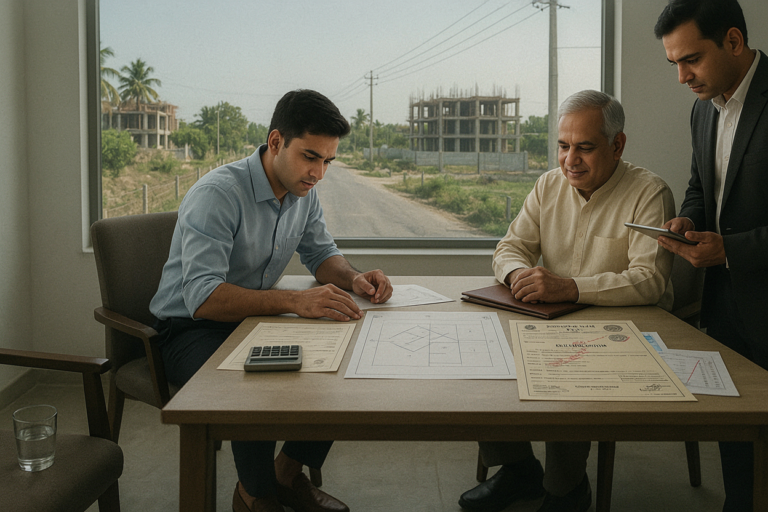
The sale agreement for any apartment purchase should specify the UDS as a concrete measurement expressed in square feet or as a precise fraction of the total land area. A document that describes UDS in vague or general terms, or that omits it entirely, has a gap that a property lawyer should address before the buyer signs anything.
Cross-checking the stated UDS against the building plan, the total land extent, and the number of units in the project confirms whether the allocation is proportional and honest. This verification takes less than an hour with a competent legal professional and it is one of the most protective steps any apartment buyer can take.
What Kavitha Does Differently Now
She tells every friend who mentions apartment hunting the same thing. Visit the flat second. Ask for the UDS number first.
Because everything else in that flat the tiles, the paint, the kitchen fittings will need replacing eventually. The land those walls sit on will not. And the share of that land recorded in your name on the day of registration is the part of your purchase that quietly determines how much your investment is actually worth twenty years from now.