Think back to 2015. A flat in the suburbs of Chennai or Hyderabad that cost ₹40 lakhs is worth nearly double that today. Someone who bought land on the outskirts of Bengaluru back then is sitting on returns that no fixed deposit could have ever matched.
Now imagine looking five years ahead. The real estate market forecast from 2026 to 2030 tells a story that every investor first-timer or seasoned genuinely needs to hear.
India’s real estate sector is not just recovering from post-pandemic disruptions. It is entering a phase of sustained, structurally driven growth. And the numbers building behind that story are hard to dismiss.
The country’s urban population is expected to cross 600 million by 2030. That is not a projection built on optimism it is driven by migration, employment patterns, and a growing middle class that wants ownership, not just rental accommodation. Every one of those millions needs a place to live, work, and spend. Real estate sits right at the centre of all three.
Infrastructure is the second engine powering this forecast. The pace of highway expansion, metro rail development, and industrial corridor creation across India has been remarkable. What this does to property values in surrounding areas is well documented land near new connectivity appreciates faster and holds its value longer. Investors who position themselves ahead of infrastructure completion consistently outperform those who wait for the ribbon-cutting ceremony.
The rise of Tier 2 and Tier 3 cities is perhaps the most underappreciated part of the 2026–2030 real estate story. Cities like Chennai, Coimbatore, Indore, Surat, Kochi, and Vizag are drawing investment, talent, and population in ways that seemed unlikely just a decade ago. Land prices in these cities are still accessible. But that window is closing gradually, but noticeably.
Commercial real estate deserves equal attention. India’s position as a global services hub is strengthening. Global Capability Centres are expanding operations here at a pace that keeps demand for quality office space consistently ahead of supply in major cities. For investors looking at rental income rather than just capital appreciation, commercial assets in IT corridors offer yields that residential properties rarely match.
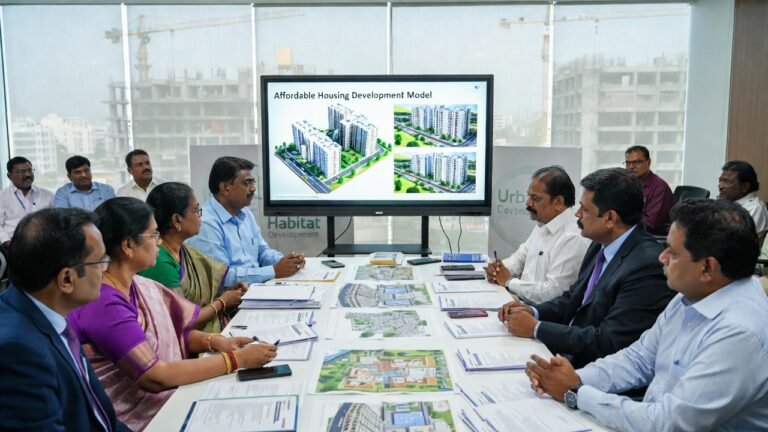
Affordable housing remains a critical segment through 2030. Government focus on this category through policy support, tax incentives, and infrastructure linkages means that well-located affordable housing projects in growing cities carry both social relevance and investment merit.
One honest caution no forecast eliminates risk. Interest rate movements, regulatory changes, and global economic shifts can slow momentum. But the structural drivers behind India’s real estate market forecast for 2026 to 2030 are not built on sentiment alone. They rest on demographics, urbanisation, and economic fundamentals that have been building for years.
For investors willing to think in five-year horizons rather than five-month ones, the outlook is as compelling as it has been in a long time.