
Buying property is a major financial decision, and most buyers depend on home or plot loans to make it possible. Many people assume loan approval depends only on salary, but banks actually check several important factors before approving property loans. Understanding how banks decide loan eligibility helps buyers prepare better and improves approval chances.
Income and Repayment Capacity
The first thing banks check is the buyer’s income stability. Lenders want to ensure borrowers can repay the loan without financial stress. Banks usually calculate eligibility based on monthly salary, business income, or other reliable earnings.
Most banks prefer EMI payments to stay within 30% to 40% of the borrower’s monthly income. If EMI exceeds this limit, banks may reduce loan amount or reject the application. Buyers with stable employment history or steady business income often get better loan approval chances.
Credit Score and Financial History
Credit score plays a major role in loan eligibility. It shows how responsibly a borrower has managed past loans and credit cards. A high credit score increases approval chances and may help buyers get lower interest rates.
Late payments, loan defaults, or heavy credit card debts can negatively impact eligibility. Banks consider a credit score above 700 as safer for loan approval in most cases.
Property Approval and Legal Status
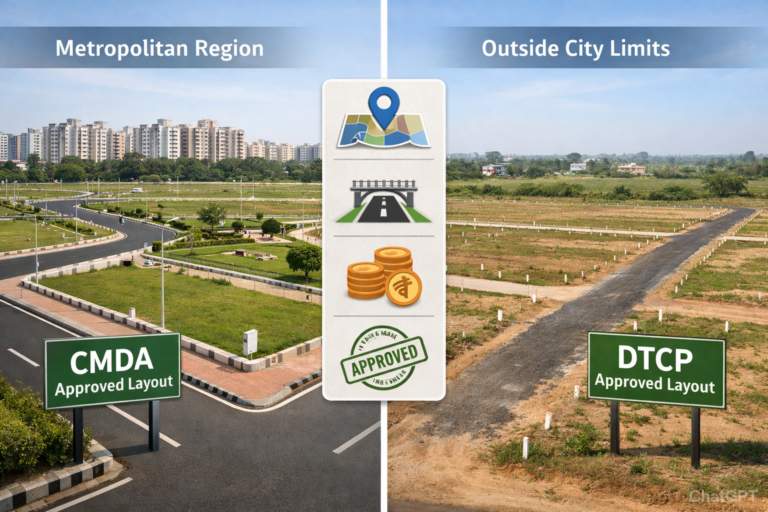
Banks carefully verify the property before approving loans. They usually provide loans only for legally approved properties. This includes checking layout approvals, ownership records, and construction permissions.
Properties without proper approvals or with legal disputes are often rejected for loans. Buyers must ensure documents such as sale deed, patta, and encumbrance certificate are clear before applying for a loan.
Buyer’s Age and Employment Stability
Age is another factor banks consider. Younger buyers often get longer loan tenure options, which reduces EMI burden. Older applicants may get shorter repayment periods, increasing EMI amounts.
Employment stability is equally important. Buyers working in permanent or long-term jobs usually receive better loan approval chances. Self-employed individuals may also qualify but need to provide strong income proof and business stability records.
Existing Loans and Financial Commitments
Banks check if buyers already have ongoing loans like personal loans, car loans, or credit card EMIs. Higher existing financial commitments reduce loan eligibility because repayment risk increases.
Maintaining low debt levels improves chances of higher loan approval and better repayment flexibility.
Down Payment Contribution
Banks generally do not provide 100% property funding. Buyers must pay a certain percentage of the property value as a down payment. Higher down payment reduces bank risk and improves approval chances. It also lowers overall loan burden and interest cost.
Guidelines and Risk Assessment
Loan approval decisions are influenced by financial regulations monitored by institutions like the Reserve Bank of India. These guidelines help banks maintain safe lending practices and reduce financial risks for both lenders and borrowers.
Final Thoughts
Property loan eligibility depends on multiple factors including income stability, credit score, legal property status, and financial discipline. Buyers who maintain strong financial records, choose approved properties, and plan repayments carefully have better chances of loan approval. Understanding these factors helps buyers prepare confidently and make safer property investment decisions.