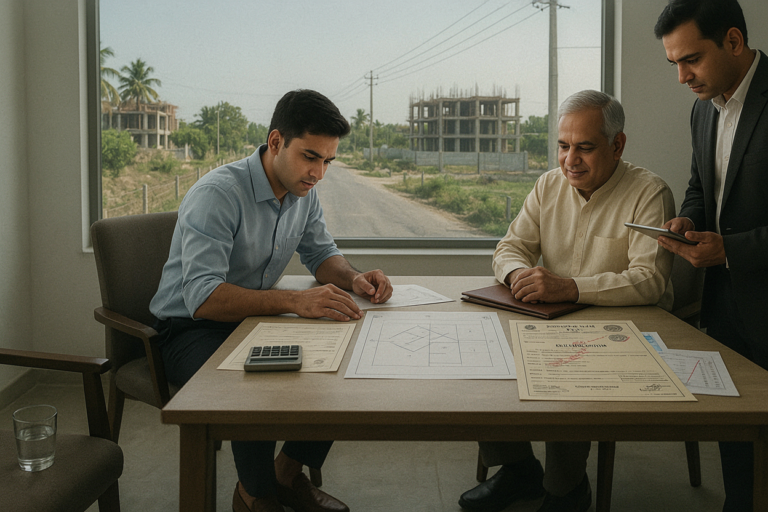

Nandini had saved ₹8 lakhs. She found a plot she loved near Vandalur, priced at ₹22 lakhs. With a plot loan covering 70 percent ₹15.4 lakhs she calculated her shortfall at ₹6.6 lakhs. Her savings covered it with room to spare.
What she had not calculated was everything that arrives at the registration table alongside the property itself.
By the time the sale deed was registered in her name, she had spent nearly ₹10.8 lakhs from her own pocket not ₹6.6 lakhs. The extra ₹4.2 lakhs had a name she had never properly understood.
Closing costs.
What Closing Costs Actually Are
The Charges That Arrive at the Finish Line
Closing costs are the collection of fees, taxes, and charges that a property buyer must pay to complete the transfer of ownership separate from the actual property price and separate from the loan amount. In India, these costs are not negotiable the way the property price sometimes is. Most of them are fixed by state government regulations and must be paid before or at registration.
For first-time buyers, closing costs are the most common source of financial surprise not because the information is hidden, but because nobody walks buyers through the complete picture before they commit to a purchase.
Stamp Duty The Largest Closing Cost
In Tamil Nadu, stamp duty is charged at 7 percent of either the transaction value or the government’s guideline value for the property whichever is higher. On Nandini’s ₹22 lakh plot, stamp duty came to ₹1.54 lakhs. This single charge consumed the largest portion of her closing cost outlay.
Buyers who purchase below guideline value hoping to reduce stamp duty discover that the government calculates the charge on its own minimum value regardless of what was agreed in the sale. Checking the guideline value before finalising any property purchase eliminates this surprise entirely.
The Other Components That Add Up Quickly
Registration Fee and Document Handling
Beyond stamp duty, Tamil Nadu charges a registration fee of 4 percent of the property value for transferring ownership into the buyer’s name. On a ₹22 lakh transaction, this added another ₹88,000 to Nandini’s closing costs bringing the combined government charge to over ₹2.4 lakhs before any professional fees were counted.
Document handling, Sub-Registrar office charges, and franking fees add smaller but still meaningful amounts that vary based on the property type and the specific documents being registered.
Legal and Professional Fees
Property lawyers charge for reviewing title documents, drafting the sale agreement, and attending the registration. For a straightforward residential plot purchase, legal fees in Chennai typically run between ₹5,000 and ₹15,000 depending on the complexity of the title history and the lawyer’s experience.
Buyers who skip independent legal representation to save this fee occasionally discover document problems after registration when the cost of fixing them is considerably higher than the professional fee they avoided.
Loan-Related Closing Charges
For buyers accessing a plot or home loan, the loan itself carries closing costs. Processing fees, legal verification fees charged by the bank, technical valuation fees, and stamp duty on the loan agreement and mortgage documents collectively add another ₹15,000 to ₹30,000 depending on the lender and loan size.
These charges arrive separately from the property transaction costs but they arrive at the same time, creating a simultaneous demand on the buyer’s available funds that many first-time buyers have not planned for.
What Nandini Did Differently When Her Sister Bought a Property
She sat her sister down six months before the property search began and walked through every component of closing costs with a calculator. Her sister budgeted ₹3.5 lakhs for closing costs on a ₹20 lakh property and arrived at registration day with enough in her account to handle everything without scrambling.
The number that surprises every first-time buyer is the same number that never surprises a second-time buyer. Closing costs in India typically run between 10 and 14 percent of the property value and knowing that figure before the property search begins is the single most useful piece of financial preparation any first-time buyer can do.